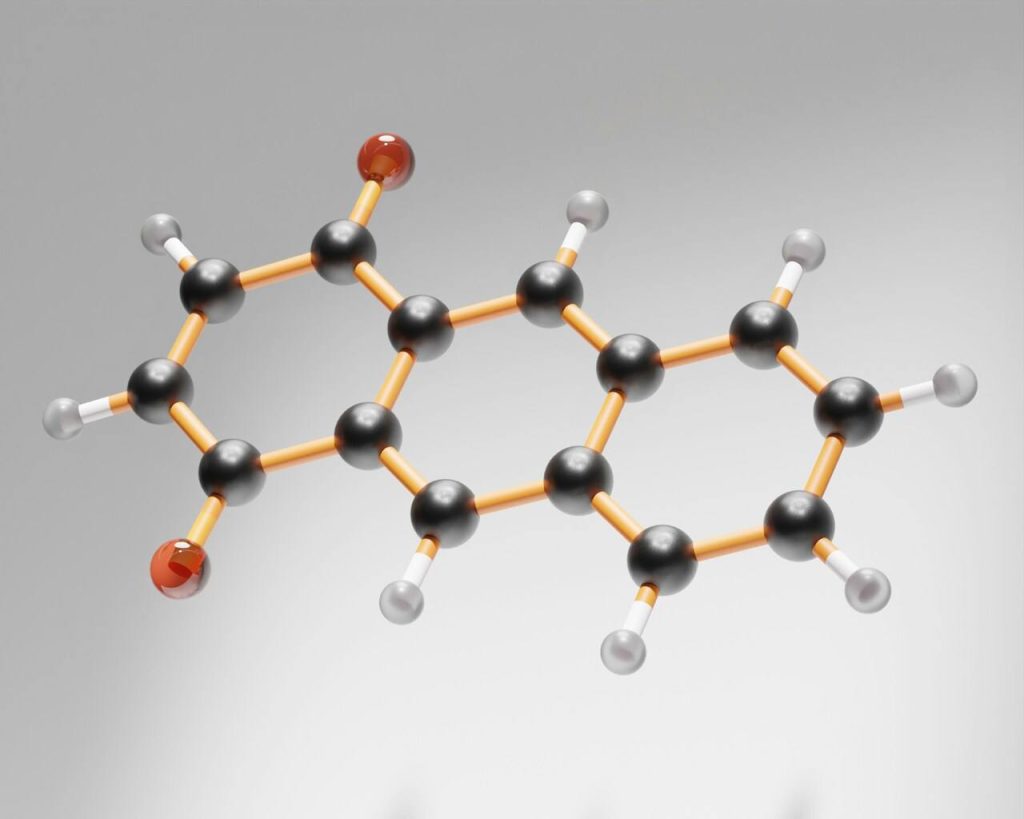
How did the first life spark from basic chemicals? Scientists have puzzled over this for decades. Now, researchers at the UK’s MRC Laboratory of Molecular Biology have uncovered a breakthrough. They found a tiny RNA molecule called QT45 that can copy itself and its mirror-image strand. That’s a crucial step toward self-replication—the spark life needs to get going.
It might look like a plain molecule at first. But it could rewrite how we imagine life’s origin on Earth. The game-changer? QT45 is super small, making it a realistic contender for something that could form naturally on our young planet.
This Tiny RNA Molecule QT45 Is Reshaping Ideas About Life’s Dawn
The team describes QT45 as a short RNA polymerase ribozyme. Don’t let the jargon fool you—it’s an RNA strand that acts like a basic enzyme, copying other RNA. In origin-of-life theories, RNA isn’t just genetic cargo; it’s a multitasker that handles chemistry too.
“This work gives us a peek at life’s earliest steps and sharpens our grasp of the core molecules behind all living things,” says lead author Edoardo Gianni.
Here’s the breakthrough: Past RNA copiers were too big and intricate to form from scratch without “instructions.” QT45 sidesteps that—it’s simpler and smaller, fitting perfectly into a raw, early-Earth scenario.
Two Key Reactions That Pave the Way for RNA Self-Replication
QT45 nailed two vital tasks. First, it made its complementary strand—a perfect mirror copy of its sequence. Think of it as crafting the matching puzzle piece from the original. Then, that copy served as a template to rebuild the original. These steps form the backbone of true self-copying.
It’s not a full endless loop yet. But demonstrating these toughest parts is huge—the RNA world hypothesis had stalled here for years.
QT45 Shatters Assumptions About How Complex the First Copier Needed to Be
The team didn’t engineer QT45 outright. They generated tons of random short RNA strands, then iteratively picked the best copiers—like speed-run evolution in a lab. QT45 rose to the top.
Self-replicating molecules such as RNA are considered a plausible foundation for the origin of life on Earth. A remarkably small RNA molecule of only 45 nucleotides (QT45) that can synthesize itself and its complementary strand is now published in Science: https://t.co/itChluJ2Mu pic.twitter.com/NnRj1PNKES
— Tomas Malinauskas (@t_malinauskas) February 14, 2026
This flips the script. Researchers had chased the same ribozyme family for 30+ years, assuming new ones were rare and needed long sequences. QT45 proves otherwise.
“Everyone stuck to the same ribozyme path for decades, thinking a fresh one was a long shot—and that it’d need a lengthy chain. Spotting this tiny RNA makes spontaneous self-replicators far more plausible,” Gianni says.
The real power? Smaller means more likely to arise naturally on early Earth. No need for instant complexity—a basic copier kickstarts everything. The RNA world suddenly feels tangible.
QT45 Isn’t Fully Self-Replicating Yet—But It’s a Giant Leap
The team admits they’re not done. QT45 handles the two reactions, but not in one seamless cycle. Linking them is next.
Once achieved, it’d mimic a primitive replicator—no proteins or DNA required. That would supercharge the case for RNA as life’s starter.
If It Worked Here, Life Could Emerge Elsewhere in the Cosmos
QT45’s implications stretch beyond Earth. Nailing the minimal conditions for life’s kickoff helps us scan for it on exoplanets or moons. This isn’t just history—it’s a roadmap for cosmic hunts.
“Beyond the science, it reshapes odds on spontaneous life and spots where it might pop up on other worlds,” Gianni notes.