
We usually think of the brain as an organ safely tucked inside the skull, mechanically separated from the rest of the body. But a new study suggests the picture may be more complicated. When you tighten your abdominal muscles, even just before standing up from a chair or taking a step, pressure inside the body may travel all the way to the brain.
Researchers at Penn State found that the abdomen may act a bit like a pump. When the abdominal muscles contract, they push blood from the abdominal cavity into a network of veins around the spine, creating something like a hydraulic link between the body and the head. The result is a tiny movement of the brain inside the skull and, according to simulations, movement of cerebrospinal fluid, or CSF, the fluid involved in clearing waste products from nervous tissue.
Tightening the Abdomen Was Enough to Make the Brain Shift
The researchers captured this motion in awake mice using high-speed two-photon microscopy. This was not just random brain movement caused by a heartbeat or breathing. The strongest movement appeared right when the animal was preparing to move and engaging its abdominal muscles.
In other words, the brain did not start reacting only after the legs moved. A subtle shift appeared just before the body’s movement began. Patrick Drew of Penn State describes the process as a kind of internal hydraulic effect, with the abdomen acting as the pump.
“When the abdominal muscles contract, they push blood from the abdomen into the spinal cord, just like in a hydraulic system,” Drew explained.
The team then ran a simple control test. They wanted to see whether the brain would move even if the body itself stayed still. So they gently applied pressure to the abdomens of lightly anesthetized mice and watched what happened in the brain. The pressure was weaker than what a person would feel from a blood pressure cuff on the arm, but it was still enough to shift the animal’s brain slightly. Once the pressure was released, the brain began moving back toward its original position almost immediately.
Pressure From the Belly May Move the Brain Like a Soft Sponge
Francesco Costanzo, who led the computational modeling, used a simple image to explain the idea. The brain is not a solid block of material. It is more like a soft sponge. It contains tissue, open spaces and fluid that can move through and around it.
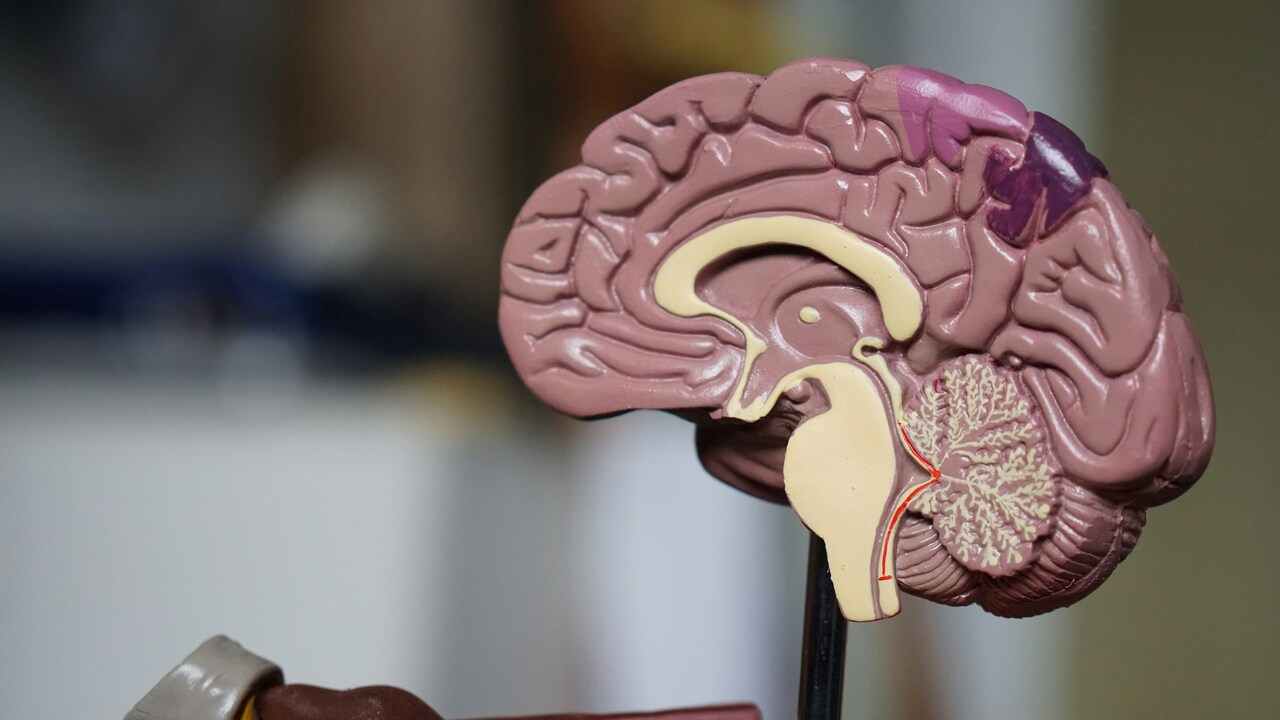
If you want to clean a sponge, simply placing it under running water is not always enough. You gently squeeze it, allowing fluid to move through the inside and carry dirt away. According to the simulations, a similar principle may operate in the brain. When abdominal pressure causes the brain to move slightly, that motion may help push cerebrospinal fluid out of brain tissue and into the space around the brain.
That fluid movement is what makes the finding so interesting. Cerebrospinal fluid helps move waste products that build up during normal nerve-cell activity. This does not mean every step literally “washes” the brain. The point is more cautious, but still important. Body movement may be one of the ways fluid inside the brain is stirred and shifted, helping maintain a healthier environment for nervous tissue.
Even Ordinary Walking May Create Tiny Motion in the Brain
Drew emphasizes that this is not the kind of movement a person would feel. The brain is not sliding around dramatically inside the skull. The effect is extremely small, more like a subtle mechanical ripple that appears during walking, standing up or simply engaging the abdominal muscles.
In practical terms, even ordinary walking may trigger a mechanical effect inside the brain that you never notice. The abdominal muscles contract, pressure travels through the venous network near the spine, the brain shifts slightly and cerebrospinal fluid may be pushed through brain tissue.
That idea adds another layer to why physical activity is often linked with brain health. Exercise is usually discussed in terms of blood flow, oxygen, metabolism or inflammation. This study suggests that movement may also matter because it physically changes pressure and fluid motion inside the central nervous system.
Veins Near the Spine May Act as a Pressure Route Between the Belly and the Brain
A key role appears to be played by a network of veins called the vertebral venous plexus. This network connects the abdominal cavity with the spinal cavity. Through this hidden venous route, pressure from the abdomen may travel upward toward the brain.
When the abdominal muscles contract, they push blood from the belly through this venous network toward the spinal cord and brain. Inside the skull, those pressure changes can slightly alter the brain’s position and set surrounding fluid in motion.
The researchers also observed that when abdominal pressure was released, the brain quickly began returning to its baseline position. This suggests that abdominal pressure can change the brain’s position rapidly, even if the shift is very small.
Movement and Sleep May Move Brain Fluid in Different Directions
One of the more intriguing parts of the work is that the simulations suggested a direction of fluid movement that differs from what has been described during sleep. This means wakefulness and sleep may influence brain fluid flow through different mechanisms.
During active movement, the model suggested that fluid is pushed out of brain tissue and toward the space around the brain. During sleep, related research has often described the opposite pattern, with fluid moving more deeply into brain tissue. Both processes may matter for brain health, but they likely do not work in the same way.
This distinction is important because it keeps the finding from becoming too simplistic. Sleep is still critical for the brain, and this study does not replace that idea. Instead, it suggests that movement and sleep may support brain fluid dynamics in complementary ways.
Obesity May Alter Pressure Conditions Between the Abdomen and the Brain
The discovery may also have implications for some health problems. The study authors note that obesity increases pressure inside the abdominal cavity, which could change normal blood flow between the abdomen and the spinal canal.

If pressure conditions between the abdomen, spine and skull are altered, the subtle motion of the brain and the circulation of cerebrospinal fluid could theoretically change as well. The researchers suggest this mechanism could be one possible factor linking obesity with poorer cognitive function. For now, however, this is not direct proof. It is a possible biological connection that needs more research.
The team also mentions that lowering abdominal pressure, for example through voiding or defecation, may partly influence cognitive function. Here, too, the idea should be treated cautiously. It is a hypothesis, not a complete explanation.
The study offers a new way to think about why movement may be good for the brain. It is not only about better blood flow or more oxygen. The body may also affect the brain mechanically, through pressure in the abdomen, veins near the spine and the fluid that surrounds nervous tissue. That quiet mechanism may be one reason the brain needs not only sleep, but also ordinary movement.