Scientists drilling into ancient Antarctic ice have uncovered something that could reshape how we view Earth’s climate from deep in the past. It doesn’t undermine the role of greenhouse gases—in fact, it reveals the climate system as even more interconnected than it appears. That old ice trapped air from an era when Earth was a vastly different planet.
Over the past 3 million years, oceans cooled by more than 2 degrees Celsius (3.6 degrees Fahrenheit). Yet the main greenhouse gases in the atmosphere didn’t drop as much as you’d expect. Carbon dioxide fell by just about 20 parts per million. Methane levels barely budged over that same period.
Put simply, the planet cooled significantly, ice sheets grew, and sea levels shifted—yet these direct measurements show greenhouse gases didn’t swing dramatically. It hints at a more complex picture. Carbon dioxide and methane weren’t the only drivers of Earth’s long-term cooling. Ocean currents, ice cover, vegetation, and how much sunlight the planet bounced back to space all likely played key roles.
Scientists Found Air in Antarctic Ice Trapped for Millions of Years
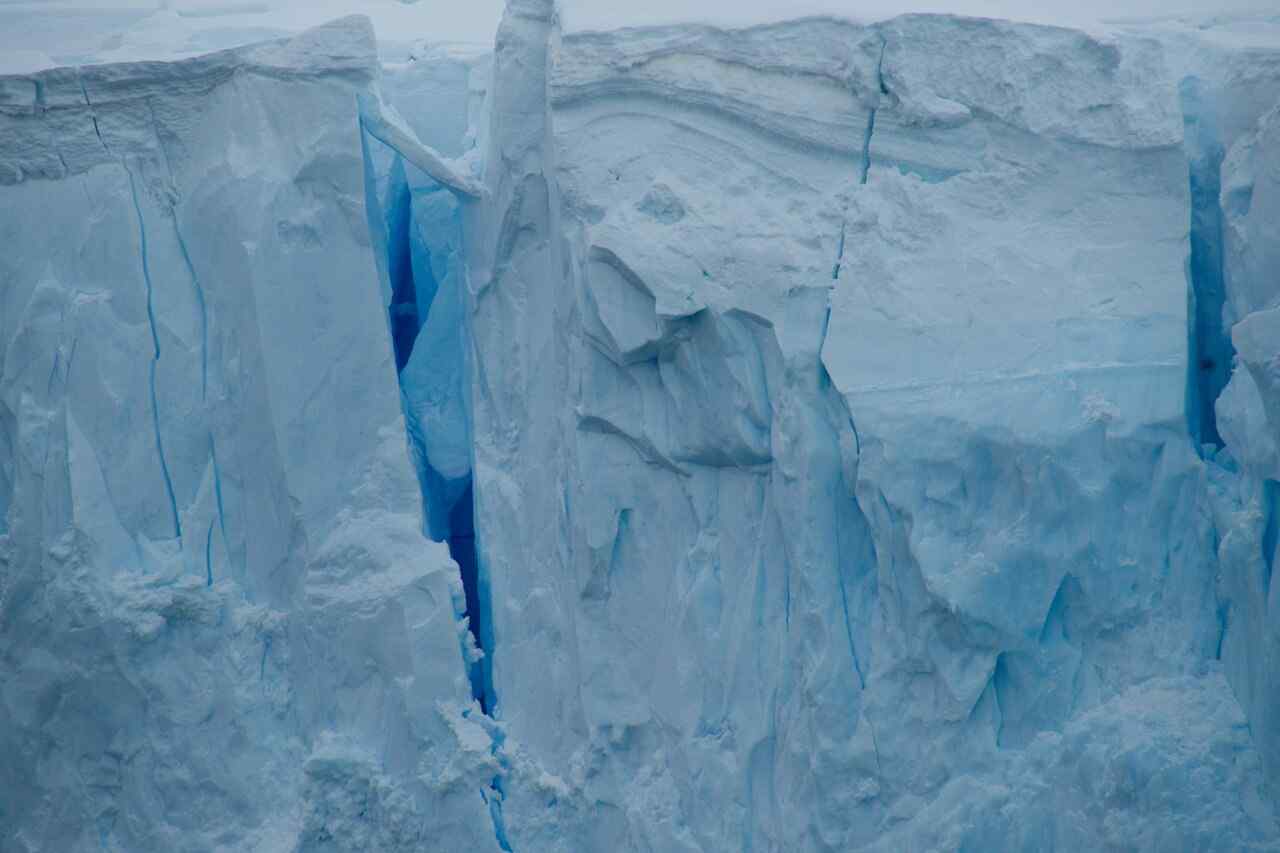
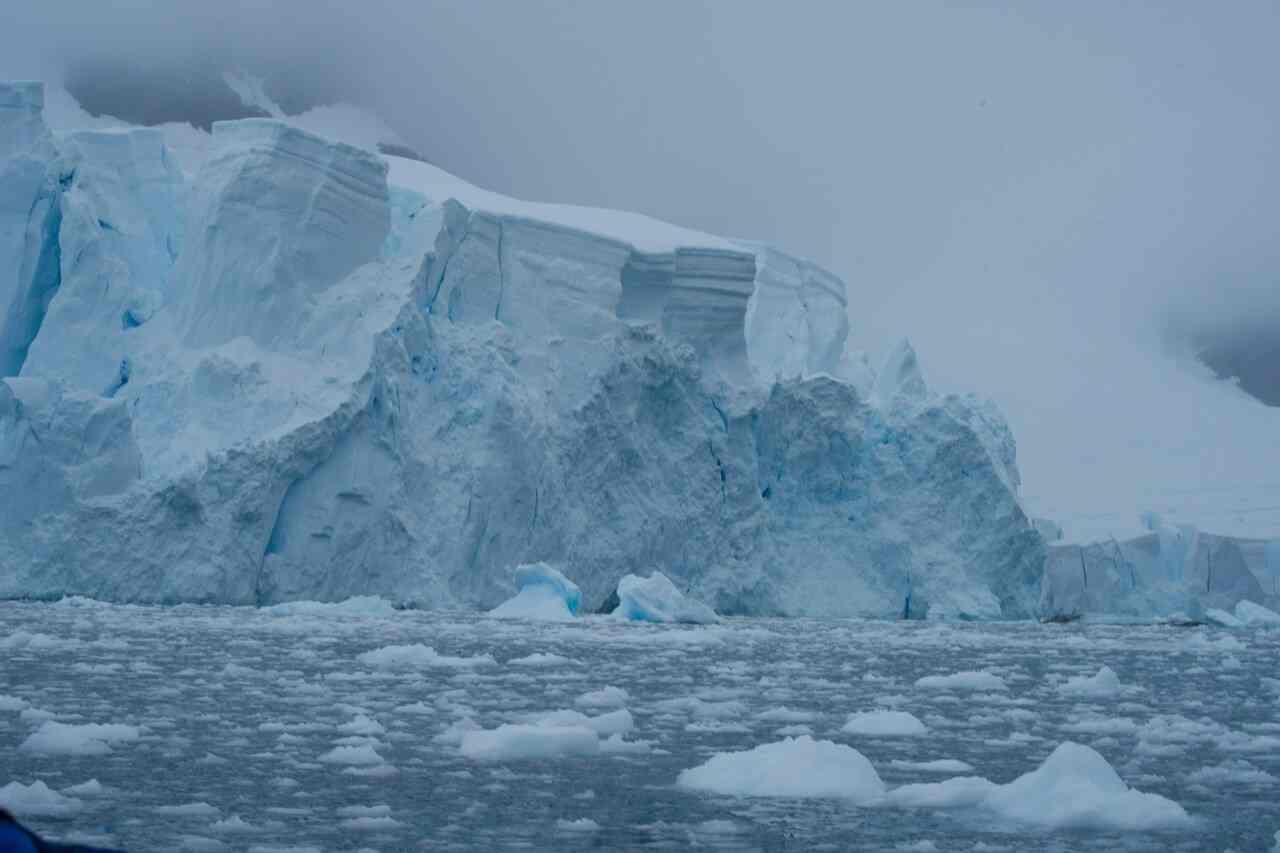
Researchers from Oregon State University zeroed in on a unique spot in Antarctica called Allan Hills. This isn’t your typical glacier where scientists can peel back layers like pages in a book. Ice from Antarctica’s interior gets shoved toward the continent’s edge and winds up jammed among mountain ranges.
That’s where it gets challenging. As the ice flows, once-flat layers twist, warp, and mix up. Scientists can’t extract one continuous climate timeline here. Instead of a full feature film of the past, they get scattered snapshots from various points in time.
“Those snapshots extend climate records from ice much further than previously possible,” said Ed Brook, director of COLDEX.
Those snapshots are gold. Inside these ancient ice chunks, air got sealed away millions of years ago. Picture it as a pristine sample of a long-lost atmosphere, frozen in an icy time capsule.
Nature research paper: Broadly stable atmospheric CO2 and CH4 levels over the past 3 million yearshttps://t.co/a5cahV98DH
— nature (@Nature) March 23, 2026
The Deep Ocean Cooled First, Surface Waters Later
Sarah Shackleton and her team analyzed ratios of noble gases in the trapped air. It sounds geeky, but the concept is straightforward. Certain gases dissolve differently in seawater based on temperature. When oceans warm or cool, it shifts the gas balance in the air that eventually gets locked in ice.
This let them reconstruct average ocean temperature changes over time. The findings were eye-opening. Over 3 million years, mean ocean temps dropped 2 to 2.5 degrees Celsius (3.6 to 4.5 degrees Fahrenheit). That might seem minor, but for the global ocean—the planet’s climate thermostat—it’s massive.
The timing was just as revealing as the cooling. Much of the deep-ocean chill hit early, starting around 3 million years ago and lasting about a million years. That lines up with the rise of big Northern Hemisphere ice sheets.
Surface waters told a different story. They cooled more slowly, dipping gradually until roughly 1 million years ago. This lag points to heat exchange between surface and deep ocean as a big factor in Earth’s climate pivot.
CO₂ Didn’t Drop as Much as You’d Think
Julia Marks-Peterson and her team examined the same ice, but focused on greenhouse gases. They measured carbon dioxide and methane in the ancient bubbles.
The results came as a surprise. Around 2.7 million years ago, atmospheric CO₂ sat at about 250 parts per million. By 1 million years ago, it dipped by only around 20 parts per million. Methane hovered near 500 parts per billion with no big long-term drop.
Today’s levels are in another league. In 2025, CO₂ hit around 425 parts per million, methane about 1,935 parts per billion. The ancient ice paints a cooler world with lower gases—but during that cooling epoch, they didn’t plummet like you might guess.
Greenhouse Gases Don’t Tell the Whole Story
So here’s the head-scratcher: If CO₂ and methane barely shifted over millions of years, why did Earth cool so dramatically?
There’s no single smoking gun. Earth’s climate is like a web of interlocking gears—one turns, and the ripple spreads. The team highlights ice volume, vegetation changes, ocean circulation, and planetary reflectivity as major players.
Reflectivity is intuitive. Bright ice bounces sunlight back to space. Darker seas and land soak it up. Expanding ice sheets amplify cooling, even without crashing greenhouse gases.
“Our hope is that this work will refine our view of past warmer climates and sharpen our understanding of how different elements of the Earth system interact,” said Marks-Peterson.
Researchers Aim to Drill Even Deeper into the Past
This research hints Antarctic ice could hold clues from even further back. COLDEX scientists recently hit ice around 6 million years old at the base of a core.
If they extract solid data from it, we’d peer into a warmer world with higher seas—not just ice ages, but a truly alien Earth.
The hunt continues. Teams keep drilling, honing CO₂ measurement techniques, and vetting other gases in old ice. With ancient samples, it’s not just about reading the air—they must confirm it hasn’t degraded over eons.
The mission? Hunt pristine ultra-old ice. Success could stretch ice-core records way back and reveal Earth’s climate as even twistier than our models predict.