Imagine managing your blood pressure with just one injection twice a year instead of keeping track of pills every single day. That is exactly the direction researchers are now exploring with the experimental drug zilebesiran, which showed in a clinical trial that it can lower blood pressure for months at a time.
Researchers at Queen Mary University of London tested this approach in 663 people whose high blood pressure was not being adequately controlled with standard treatment. The results of the KARDIA-2 study were published in JAMA.
When pills alone are not enough, a subcutaneous injection enters the picture
Zilebesiran does not work like conventional blood pressure drugs. It uses RNA interference technology, a mechanism that suppresses the production of a specific protein in the liver called angiotensinogen. This protein plays an important role in the system that regulates blood pressure. When its levels fall, blood vessels can relax more easily and pressure can go down.
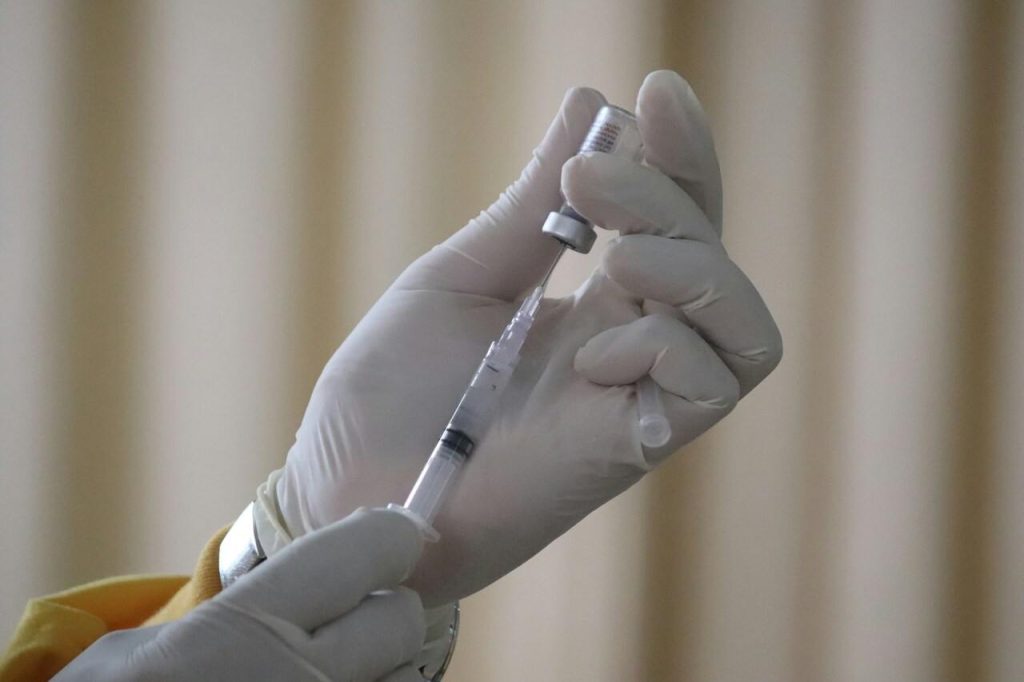
Patients in the study received the injection under the skin alongside their regular treatment. The point was not to eliminate pills altogether, but to test whether the injection could add an extra effect. And that is exactly what the researchers saw. Patients who received zilebesiran together with standard treatment had a greater reduction in blood pressure than those who remained on standard medication alone.
“Hypertension is a global health concern because blood pressure control remains poor and it is one of the leading causes of heart attacks and strokes. This study shows the efficacy and safety of zilebesiran when added to commonly used first-line blood pressure medicines,” said Dr. Manish Saxena of Queen Mary University of London.
High blood pressure is a silent problem that can go unnoticed for years, yet still kill
High blood pressure is one of the most widespread health problems today. In the United Kingdom alone, it affects about one in three adults. The problem is that it often causes no obvious symptoms for a long time. A person may feel relatively normal, while the risk of heart attack, stroke, kidney damage, and premature death quietly rises in the background.
That is exactly why adherence is such a major issue in hypertension treatment. Many patients forget to take their medication, skip doses, or stop taking it entirely after some time. Some do so because of side effects, while others simply feel fine and assume they no longer need treatment. This is where a long-acting injection could offer a real advantage.
One dose every six months sounds appealing, but for now it is still only a tested option
The biggest appeal of zilebesiran is its long-lasting effect. While most blood pressure medicines have to be taken every day, this drug is being tested as an injection that could be given once every six months. In practice, that could mean fewer missed doses, less confusion around treatment, and possibly better disease control in people who struggle with a daily routine.
“The novelty of this treatment is its long duration. One injection every six months could help millions of patients manage their condition more effectively,” Dr. Saxena added.
At the same time, expectations need to be kept in check. This is not a drug you can simply ask your doctor for in routine practice. The study showed that it can lower blood pressure, but it still has not answered the most important question. Namely, whether this kind of treatment will actually reduce the number of heart attacks, strokes, and deaths in the real world.
RNA interference targets the problem before it fully unfolds
Zilebesiran belongs to a new generation of medicines that do not simply act as a chemical brake at the end of the process, but intervene at the stage where the problematic substance is being produced. RNA interference can be thought of, in simple terms, as a way of making a cell “quiet down” a specific instruction. In this case, that instruction is the production of angiotensinogen.
Angiotensinogen is part of the system that affects how tightly blood vessels constrict, and therefore influences blood pressure. If you suppress its production, you are not only addressing the consequence, but damping down the problem at a higher control level. That is why this technology is being discussed as one of the most interesting directions hypertension treatment could take in the coming years.
It is not enough that blood pressure dropped. What matters is whether heart attacks and strokes also decline
Zilebesiran has so far completed Phase 2 clinical testing. That means researchers now have an early but stronger signal that the drug works and that its safety profile looks promising. But that is still not enough for final conclusions or routine use in everyday care.
The next step is the KARDIA-3 study, which will focus on patients with high blood pressure who also have elevated cardiovascular risk or existing cardiovascular disease. A large global outcomes trial is also planned to determine whether the treatment can truly reduce the risk of serious events such as stroke, heart attack, or death from cardiovascular causes.