When astronomers say a planet sits in the habitable zone, it sounds almost like good news. It is not too close to its star and not too far away, and in theory liquid water could exist on its surface. But that simple idea hides a major catch, one that makes the classic sci‑fi image of livable desert worlds much harder to believe.
New research from the University of Washington suggests that an Earth‑like planet cannot remain stable for the long run with only a small amount of water on its surface. To keep its climate balanced over millions of years, it may need roughly 20 to 50 percent as much water as Earth’s oceans contain. Without that, the planet’s carbon cycle can begin to fail, meaning the natural system that helps keep surface temperatures under control starts to break down.
The habitable zone is not enough. A planet can be in the right place and still become a dead world
Astronomers have already confirmed more than 6,000 exoplanets, but only some of them are serious candidates for life. Haskelle White‑Gianella, a doctoral student at the University of Washington, and her team focused on worlds with very limited surface water.
“When you are searching for life in the broad landscape of the universe with limited resources, you have to filter out some planets,” said White‑Gianella.
There may be many dry, rocky worlds like this across the galaxy. The problem is that even if they orbit at the right distance from their star, that does not automatically mean they can support life for very long.
A planet has its own thermostat. If it fails, temperatures can spiral out of control
The key is the geologic carbon cycle. This is a water‑driven process that slowly moves carbon between a planet’s atmosphere, surface, and interior over millions of years. On Earth, it acts like a long‑term climate stabilizer.
The process is slow, but powerful. Carbon dioxide enters the atmosphere through volcanoes and later dissolves in rainwater. Rain then reacts chemically with rocks on the surface, and runoff carries carbon toward the oceans. There, it gradually settles onto the seafloor.
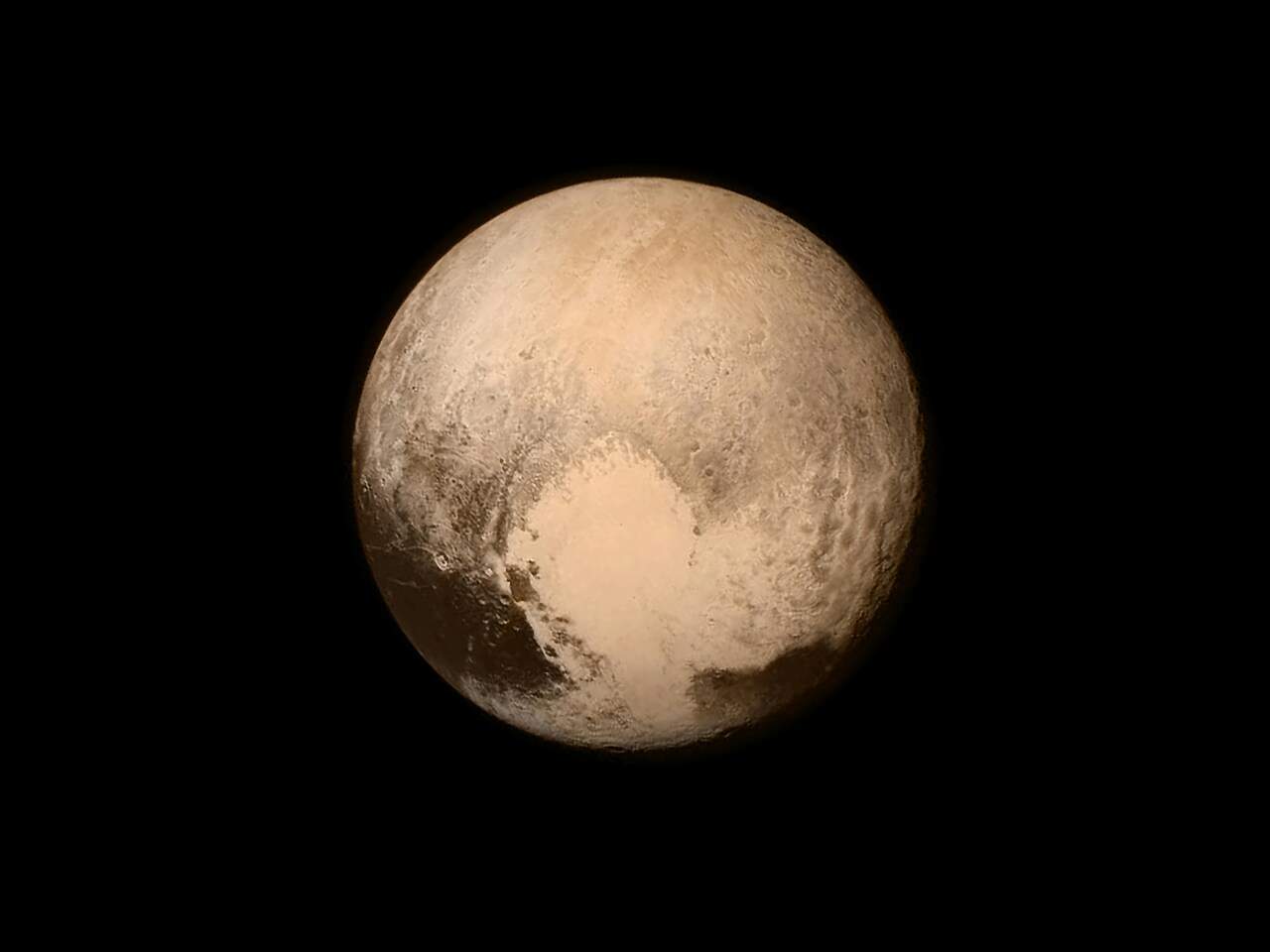
Plate tectonics then pull carbon‑rich oceanic plates beneath continents. Millions of years later, that carbon can return to the surface through mountain building or volcanic activity. It is not a quick system, but it is one of the reasons a planet can avoid wild climate swings over deep time.
When there is not enough water, the planet stops pulling CO₂ out of the air
When a planet has too little water, the issue is not just that the surface is dry. The deeper problem is chemical. Without enough water, there is not enough rain. Without enough rain, surface rocks do not weather fast enough through chemical reactions. That weathering is one of the main ways a planet removes carbon dioxide from its atmosphere.
Volcanoes, however, keep releasing carbon dioxide. If the planet cannot store that carbon back into rocks and oceans quickly enough, CO₂ begins to build up in the atmosphere. The air then behaves a little like a thicker blanket. It traps more heat, the surface warms, and the remaining water evaporates even faster.
That creates a dangerous loop. Less water means less rain, less rain means weaker CO₂ removal, and more CO₂ means higher temperatures. A world that once looked like a promising place for life can slowly become too hot for even the basic conditions needed for habitability.
“So that unfortunately makes these arid planets within habitable zones unlikely to be good candidates for life,” White‑Gianella said.
Venus may have paid the price for the same problem. A once‑promising world became hellish
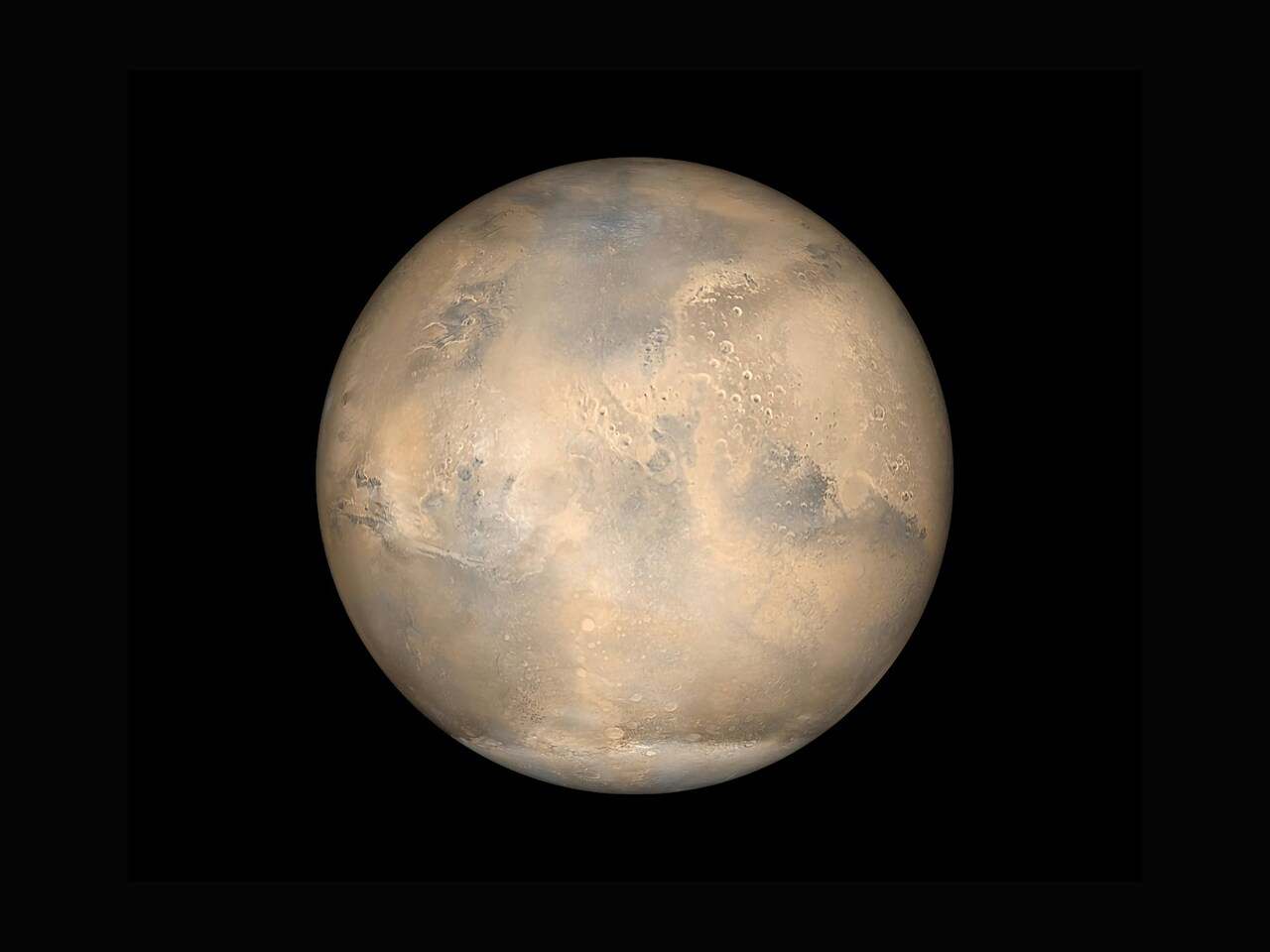
The closest example of a similar disaster may be sitting right inside our own solar system. That example is Venus. At first glance, it is not an entirely alien kind of world. It is roughly the same size as Earth, likely formed around the same time, and scientists think it may once have had water on its surface.
Today, however, Venus looks more like a warning about what can happen when a planet’s climate escapes control. Its surface temperature is around 450 degrees Celsius, comparable to a blazing‑hot wood‑fired pizza oven. And heat is not the only problem. The atmospheric pressure is so extreme that standing on the surface would feel, as White‑Gianella put it, like being crushed by 10 blue whales.
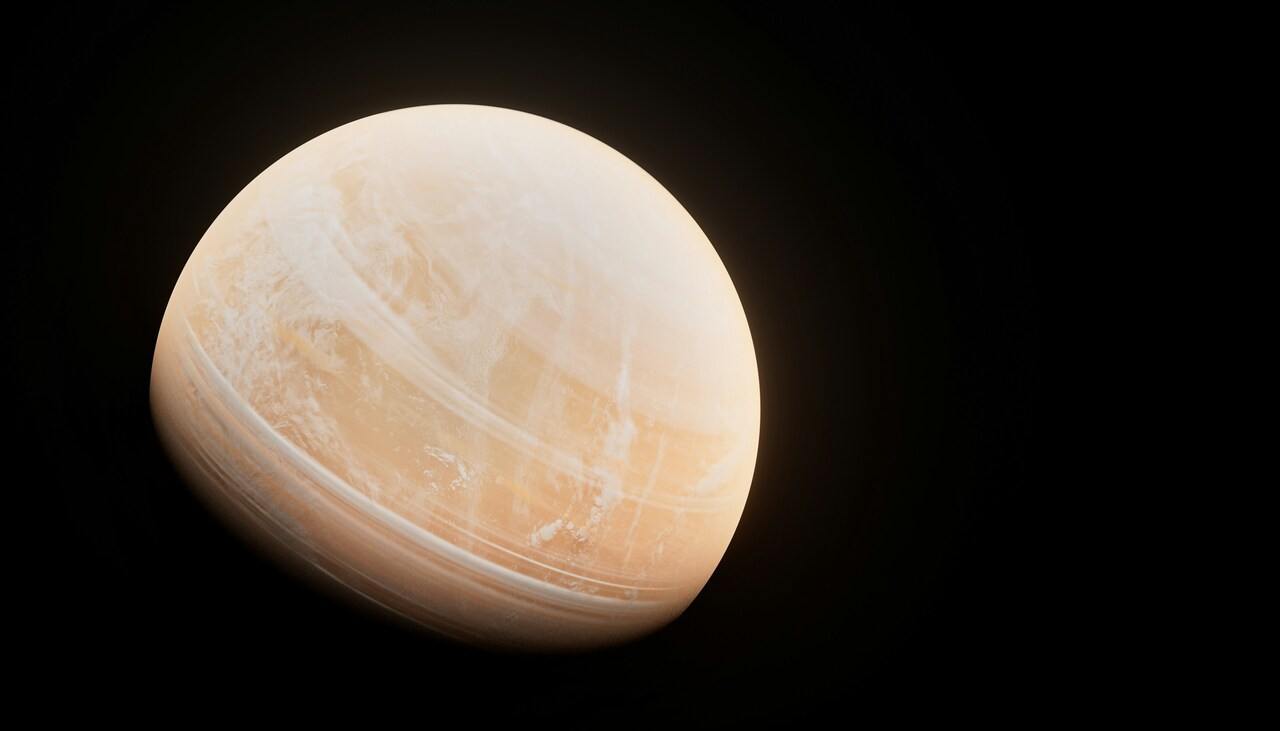
The researchers suggest that Venus may have started with slightly less water than Earth. Because it also orbits closer to the Sun, its surface received more heat. If that disrupted the geologic carbon cycle, carbon dioxide would have accumulated in the atmosphere, temperatures would have climbed, and the remaining water would have gradually disappeared. In other words, Venus may have entered a climate trap that was extremely difficult to escape.
Scientists tested what happens when a planet begins with too little water
White‑Gianella adapted existing computer models so they would better represent dry, rocky planets. Earlier carbon cycle models had focused more on cooler or wetter worlds. In other words, scientists had already studied planets where rain and oceans behave at least somewhat like they do on Earth. What was less clear was what happens on a world where water exists only in small amounts.
That is why the team refined estimates of evaporation and precipitation. It was not enough to assume that sunlight warms the surface and water evaporates. On dry planets, other factors can matter too, including wind, which can speed up evaporation in the same way wet clothes dry faster outside when air is moving.
The results showed that even a planet that forms with surface water may not keep it forever. If it begins with too little, its carbon cycle can become unbalanced, carbon dioxide can build up in the atmosphere, and temperatures can rise. On geologic timescales, meaning over millions to billions of years, a world that once seemed promising could become a planet where stable liquid water no longer has a real chance to survive.
The answer may come not from distant worlds, but from Venus
That is why scientists are also watching future missions to Venus. Those missions could help reveal whether the planet once had water, how quickly it lost it, and whether its atmosphere changed slowly or after a major climate shift. If researchers can better estimate Venus’ original water supply, they may also be able to test the models now being used to understand distant exoplanets.
“It’s very unlikely that we will land something on the surface of an exoplanet in our lifetime, but Venus — our next‑door neighbor — is arguably the best exoplanet analog,” White‑Gianella said.
For distant worlds, the old question may no longer be enough: Is the planet in the habitable zone? The more important question may be how much water it managed to keep. A planet can sit at the right distance from its star, yet if it has too little water, its climate may eventually turn into a trap.