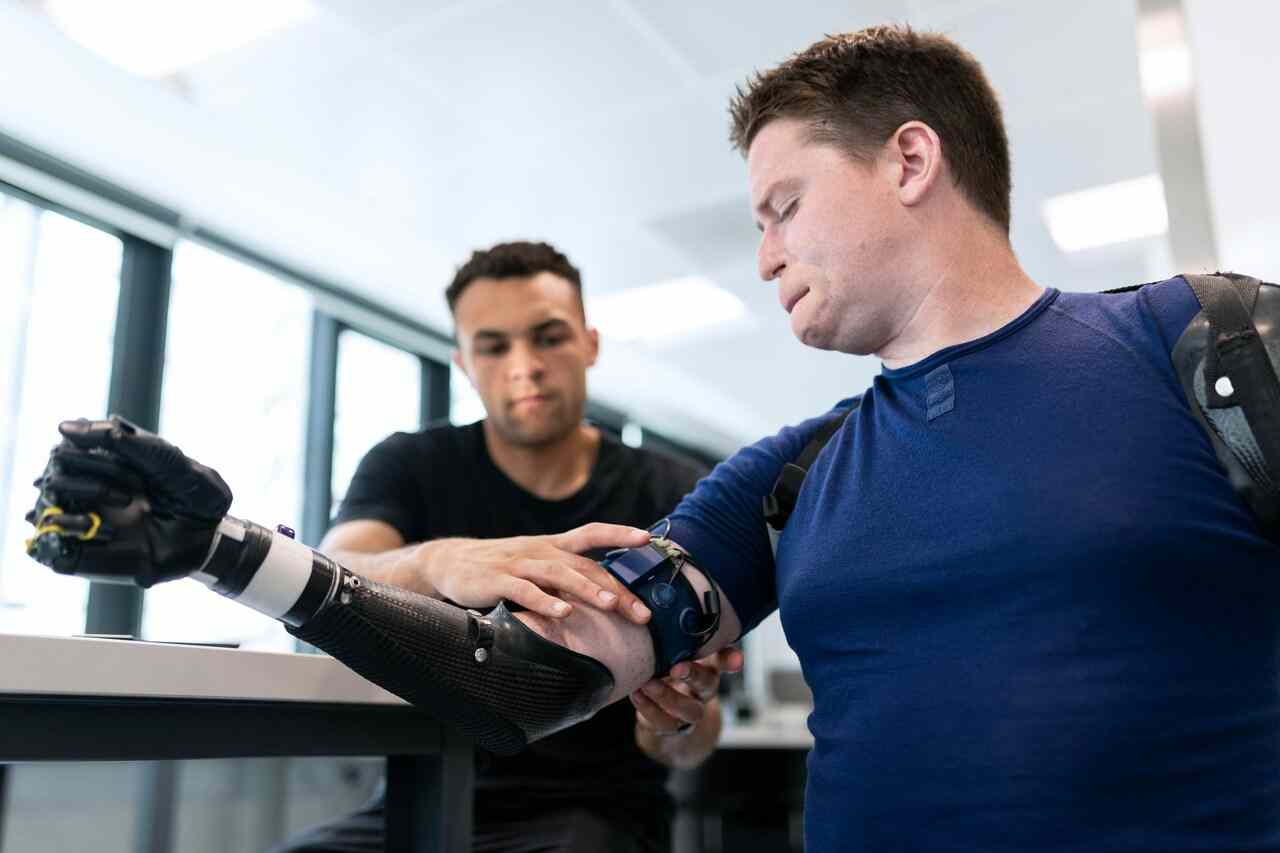
Every year, more than 1 million people around the world lose a limb. Amputations aren’t just from severe injuries—they’re also caused by diabetes, infections, and cancer. That’s why scientists are chasing something that still sounds like science fiction: a way to get the body to rebuild a lost limb.
Researchers from three universities have now taken a big step toward cracking that code—a mechanism that could one day work in humans too. The clues come from the genes of a salamander, a mouse, and a fish, animals that seem worlds apart but share surprising regeneration tricks.
What if the key to regrowing human limbs has been hiding in nature all along?
Wake Forest researchers are uncovering how a salamander gene could help unlock regenerative therapies in humans. It’s early, but it’s a powerful step toward what once felt impossible.#ProHumanitate… pic.twitter.com/Cw4MyLI45b
— Wake Forest University (@WakeForest) April 21, 2026
Three Very Different Animals Pointed to the Same Clue
Josh Currie from Wake Forest University and his team studied an odd trio: the Mexican axolotl, zebrafish, and mice. Each has its own knack for regrowing body parts, prompting scientists to hunt for a common thread behind those powers.
“This significant research brought together three labs, working across three organisms to compare regeneration. It showed us that there are universal, unifying genetic programs that are driving regeneration in very different types of organisms, salamanders, zebrafish and mice.”
The axolotl is a regeneration superstar. It can regrow entire limbs, its tail (spinal cord included), and even parts of its heart, brain, and jaw. Zebrafish rebuild their fins and other tissues. Mice are more limited, but they can regrow digit tips. Humans sometimes do the same if the nail bed stays intact.
SP6 and SP8 Help Kick Off Tissue Repair
Scientists found that the same genes—SP6 and SP8—activate during regeneration in all three species. They fire up in the skin over the injury. That skin isn’t just a bandage; it sends signals to kickstart rebuilding.
SP8 proved especially crucial. When researchers knocked it out of axolotls using CRISPR, the salamanders couldn’t properly regrow limb bones. Mice lacking SP6 and SP8 had the same issue. Bottom line: without these genes, regeneration doesn’t get off the ground. They’re key players in the body’s injury playbook.
When a Key Gene Was Missing, Scientists Tried Another Route
David Brown at Duke University took it further. His team didn’t stop at what goes wrong without a key gene—they tested if they could bypass the problem, at least partly.
They developed a gene therapy to deliver a bone-regrowth signal directly to injured tissue. It supplied FGF8, the molecule SP8 normally activates. In mice, it restarted partial bone growth in damaged digits. Even without the gene, the body got the signal it needed to repair.
“We can use this as a kind of proof of principle that we might be able to deliver therapies to substitute for this regenerative style of epidermis in regrowing tissue in humans.”
Science Is Still a Long Way From Regrowing a Human Arm
Don’t get too excited—scientists aren’t regrowing human arms yet. This is just an early breakthrough. But it proves regeneration follows specific genetic signals that medicine might one day harness.
The team stays realistic: mouse results are far from human trials. Still, they see this fitting with other advances, like stem cell therapies or tissue scaffolds. Real progress will likely blend multiple strategies.
For Scientists, This Is Not a Curiosity. It Is a Problem Affecting Millions
Every year, more than 1 million people lose limbs from injuries, cancer, infections, diabetes, or vascular disease. These issues are rising, and medicine still falls short.
Prosthetics help a lot, but they can’t match a real limb. No full sensation, no natural movement, no living tissue that heals and adapts. That’s why experts study animals that never lost this superpower. It’s not a regrowth how-to yet—but spotting this shared genetic pathway across species means it might not stay sci-fi forever.